
Table of Contents
Hero Introduction
There’s a particular kind of excitement that comes with unboxing a phone that promises flagship performance without the flagship price tag. That’s exactly the feeling I had when the OnePlus 13R landed on my desk—matte black finish, surprisingly light for its size, and carrying the weight of some serious expectations.
The OnePlus R-series has always been an interesting bet. It’s not the flagship. It’s not the budget option. It exists in that tricky middle ground where the company has to convince you that you’re not compromising—that you’re actually making a smart choice. With the 13R, OnePlus is swinging harder than ever in that argument.
Released in early 2025 and still very much a relevant purchase heading into 2026, the OnePlus 13R brings Snapdragon 8 Gen 3 firepower, a large 6000mAh battery, and a camera system that OnePlus promises has grown up from the 12R’s setup. It’s priced aggressively against the likes of Samsung’s Galaxy A-series upper tier, the iQOO Neo 9 Pro, and even entry-level premium phones from Xiaomi’s stable.

But here’s the real question hanging over this device: does the 13R give you enough reason to skip the OnePlus 13 and save ₹15,000–20,000? Or are the compromises too visible once the honeymoon phase is over?
I spent seven full days with the OnePlus 13R—commuting with it, gaming on it at 11pm when I probably should have been sleeping, shooting family photos at a birthday party with poor indoor lighting, and stress-testing it on long travel days. What I found was a phone that gets more right than I expected and stumbles in a couple of places that actually matter.
This review is for the person who works hard for their money and wants to make a genuinely informed decision — not just read specs. Let’s get into it.
Quick Verdict Box
| Category | Details |
|---|---|
| Overall Rating | 8.4 / 10 |
| Best Feature | Snapdragon 8 Gen 3 performance + 6000mAh battery combo |
| Biggest Weakness | Camera versatility — no telephoto lens, average ultrawide |
| Best For | Power users, gamers, students who want flagship-tier performance on a mid-premium budget |
| Price Range | ₹39,999 – ₹43,999 (India, 2026) |
| Final Verdict | A seriously compelling buy if camera isn’t your top priority. One of the best performance-per-rupee phones you can get right now. |
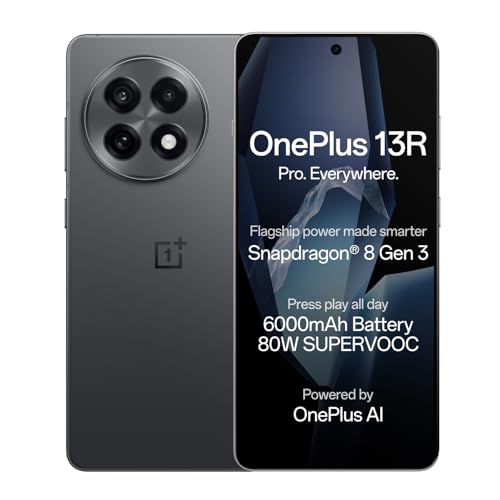
- Flagship power made smarter with the Snapdragon 8 Gen 3 flagship – Up to 98% faster AI, 30% faster CPU compared to the O…
- Winning made smooth with maximum 120fps gaming experience, no input delay and zero-touch latency gameplay. We’ve tuned t…
- Our biggest battery ever – Press play all day, every day, with the cutting-edge 6000mAh battery. Driven by our next-gen …
Phone Overview
OnePlus has a clear strategy with the R-series: take last year’s flagship processor, pair it with a practical feature set, and package it at a price that makes the buyer feel smart. The 12R did this with the Snapdragon 8 Gen 2. The 13R takes it a step further by using the Snapdragon 8 Gen 3 — the same chip powering the OnePlus 13 and Samsung Galaxy S24 Ultra.
Think about that for a second. You’re getting a flagship-tier processor in a phone that costs nearly half the price of most premium flagships. That’s the core value proposition, and it’s a strong one.
Over the 12R, the improvements are meaningful. The battery jumps from 5500mAh to 6000mAh. The display gets brighter. Thermal management improves with a larger vapor chamber. Cameras are refreshed. OxygenOS 15 adds cleaner software and smarter AI tools.
Competition is fierce in this category. The iQOO Neo 9 Pro brings similar raw performance. Samsung’s Galaxy A56 5G focuses on ecosystem and reliability. Poco F6 Pro undercuts on pricing. Stretch your budget slightly, and the OnePlus 13 itself becomes tempting.
OnePlus answers with strong performance, clean software, excellent battery life, and premium design — and honestly, that’s a convincing combination.
Design & Build Quality
The OnePlus 13R is a good-looking phone that doesn’t scream for attention. It has a mature design language — professional enough for office use, stylish enough for casual users.
The Nebula Noir variant feels especially premium with its matte glass finish that surprisingly resists fingerprints. After a full week of use, it still looked clean without constant wiping.
The aluminium frame adds to the premium feel, while the circular camera module gives it a flagship OnePlus identity. At 207 grams, it isn’t lightweight, but the weight distribution is balanced enough to avoid discomfort.
Despite packing a massive 6000mAh battery, the phone remains reasonably slim at 8.8mm. The curved edges improve hand feel, though they occasionally cause accidental touches during gaming.
IP65 water resistance means it survives splashes and rain confidently, even if it falls short of flagship-level IP68 protection.
And yes — the alert slider is still here. In a world where brands keep removing useful hardware features, OnePlus deserves credit for keeping one of Android’s best convenience tools alive.
Overall, the build quality feels closer to a ₹50,000 phone than a ₹40,000 one.
Display Experience
The 6.78-inch ProXDR AMOLED display is one of the biggest strengths of the OnePlus 13R.
The 1.5K resolution strikes a perfect balance between sharpness and battery efficiency. Text looks crisp, social media feels vibrant, and HDR content genuinely shines.
The 120Hz LTPO adaptive refresh rate keeps everything buttery smooth — from scrolling Instagram to high-frame-rate gaming.
Peak brightness reaches 4500 nits for HDR content, and real-world outdoor visibility is excellent. Even under harsh Delhi summer sunlight, the display stayed readable without struggle.
Watching Netflix and Prime Video on this panel is genuinely enjoyable. Blacks are deep, colors feel cinematic, and HDR support adds richness to supported content.
Gaming performance on the display is equally impressive. Motion clarity is excellent, touch response feels instant, and long gaming sessions remain visually immersive.
My only real complaint is the curved edge design occasionally triggering phantom touches during intense BGMI matches.
Still, for this price range, this is easily one of the best displays available in 2026.
Performance & Gaming Review
This is where the OnePlus 13R truly dominates.
The Snapdragon 8 Gen 3 remains one of the strongest Android processors available even in 2026. Combined with UFS storage and optimized OxygenOS software, the phone feels effortlessly fast.
Apps launch instantly. Multitasking is flawless. Heavy games run smoothly without hesitation.
Benchmark numbers are predictably strong:
- AnTuTu Score: ~1.8–1.9 Million
- Geekbench Multi-Core: ~6800–7000
But raw numbers only matter if real-world performance matches them—and thankfully, it does.
Gaming Performance
BGMI:
Runs at 90fps Extreme settings run smoothly with stable frame rates even during intense final-circle fights.
Call of Duty Mobile:
120fps gameplay feels incredibly responsive. Combined with the AMOLED display, the experience feels close to console-quality mobile gaming.
Genshin Impact:
High settings at 60fps run beautifully with only occasional dips during heavy combat scenes.
Thermals are handled surprisingly well. The upgraded vapor chamber cooling system delays throttling significantly compared to older R-series devices.
Even after extended gaming sessions, the phone becomes warm — not painfully hot.
If gaming matters to you, the 13R is arguably one of the best gaming phones under ₹45,000 right now.
Software & User Experience
The OnePlus 13R runs OxygenOS 15 based on Android 15, and thankfully, OxygenOS has matured again into one of Android’s cleanest experiences.
Animations feel smooth. The interface stays uncluttered. System apps feel lightweight and responsive.
There is some pre-installed bloatware, but nearly everything can be removed.
AI additions like AI summary, live captions, AI writing suggestions, and AI photo editing actually feel useful rather than gimmicky.
OnePlus also promises:
- 4 Years of Android Updates
- 6 Years of Security Updates
That’s a strong commitment for a phone in this category and adds genuine long-term value.
Daily software experience is simply effortless. I never experienced freezing, lag, or stuttering during my testing period.
Camera Review
The camera setup on the OnePlus 13R is good—but not perfect.
You get:
- 50MP Sony LYT-700 Main Camera
- 8MP Ultrawide
- 2MP Macro
Daylight Photography
The main sensor performs excellently in daylight. Colours look natural, dynamic range is strong, and skin tones avoid the overprocessed look many phones suffer from.
Portrait mode is surprisingly good too. Edge detection handles hair and glasses better than expected.
Low-Light Performance
Night photography is decent but not class-leading.
Night Mode helps recover detail and reduce noise, but images sometimes look overly processed compared to Pixel devices or camera-focused rivals.
Ultrawide Camera
This is clearly the weakest part of the setup.
The 8MP sensor lacks detail, edge sharpness suffers, and distortion becomes visible in wider shots.
Zoom
Without a telephoto lens, zoom photography is limited.
2x digital crop remains usable thanks to the high-resolution main sensor, but quality drops quickly beyond that.
Video Recording
4K 60fps recording looks sharp with decent stabilization. Walking shots remain smooth enough for casual creators and social media content.
Overall camera verdict:
- Great main sensor
- Weak ultrawide
- Missing telephoto
If photography is your top priority, you can find better options. But for most users, the camera system remains more than good enough.
Battery Life & Charging
Battery life is one of the OnePlus 13R’s biggest achievements.
The 6000mAh battery consistently delivered excellent endurance throughout testing.
Typical daily usage included:
- Social media
- Navigation
- Gaming
- Music streaming
- Camera use
- Video watching
And even then, the phone regularly ended the day with 30–40% battery remaining.
Screen-on time consistently ranged between:
- 8.5 to 9 hours
Gaming battery drain was equally impressive. One hour of BGMI consumed only around 16–18%.
80W SuperVOOC charging remains incredibly fast:
- 0–50%: ~22 Minutes
- 0–100%: ~53 Minutes
Wireless charging is missing, but honestly, the battery endurance and charging speed compensate for it quite well.
Audio & Multimedia
The stereo speakers on the OnePlus 13R are genuinely impressive.
Audio feels loud, balanced, and surprisingly spacious for a smartphone.
Dolby Atmos support improves movie watching and gaming immersion noticeably.
Gaming audio positioning in BGMI and COD Mobile is especially good — footsteps and directional sound cues are clear enough to provide an actual gameplay advantage.
Haptics deserves praise too. The vibration motor feels sharp and premium while typing, gaming, or receiving notifications.
No headphone jack here, which is expected in 2026, but Bluetooth audio quality with LDAC and aptX HD support is excellent.
Connectivity & Extra Features
The OnePlus 13R comes packed with modern connectivity features:
- 5G Support
- Wi-Fi 7
- Bluetooth 5.4
- NFC
- USB-C Audio
- Fast Side Fingerprint Sensor
Wi-Fi 7 support especially helps future-proof the device for upcoming router upgrades.
The side-mounted fingerprint scanner is fast, reliable, and honestly better than many in-display solutions.
Face Unlock works quickly in good lighting but shouldn’t replace fingerprint security.
AI Features
OnePlus has added several AI tools into OxygenOS 15, and surprisingly, some of them are actually useful.
Useful AI Features
- AI Summary
- AI Writing Suggestions
- AI Eraser
- AI Unblur
- HyperBoost Gaming AI
- Circle to Search
The AI photo editing tools work better than expected, especially object removal and blur correction.
Not every AI feature feels revolutionary, but unlike many competitors, OnePlus avoids making AI feel like pure marketing fluff.
Real-Life 7-Day Usage Experience
After using the OnePlus 13R for seven full days, one thing became clear:
This phone is extremely easy to live with.
It handled:
- Long travel days
- Heavy gaming sessions
- Work multitasking
- Photography
- Entertainment streaming
…without ever feeling slow, unreliable, or frustrating.
By Day 3, I stopped treating it like a review device and simply started using it as my main phone. That’s usually the best sign a smartphone is doing its job correctly.
Pros and Cons
Pros
- Snapdragon 8 Gen 3 delivers flagship-level performance
- Outstanding battery life
- Excellent AMOLED display
- Premium design and build quality
- Clean OxygenOS experience
- Fast 80W charging
- Strong gaming performance
- Reliable fingerprint scanner
- Long software support promise
Cons
- No telephoto camera
- Weak ultrawide sensor
- No wireless charging
- IP65 instead of IP68
- Slight heating under extreme gaming
- Curved display causes occasional accidental touches
Competitor Comparison
| Feature | OnePlus 13R | iQOO Neo 9 Pro | Samsung Galaxy A56 5G | Poco F6 Pro |
|---|---|---|---|---|
| Processor | Snapdragon 8 Gen 3 | Snapdragon 8 Gen 3 | Exynos 1580 | Snapdragon 8 Gen 2 |
| Battery | 6000mAh | 4700mAh | 5000mAh | 5000mAh |
| Charging | 80W | 120W | 45W | 67W |
| Display | 120Hz AMOLED | 144Hz AMOLED | 120Hz AMOLED | 120Hz AMOLED |
| IP Rating | IP65 | IP68 | IP67 | IP64 |
| Best For | Gaming + Battery | Fast Charging | Ecosystem | Budget Gaming |
The OnePlus 13R wins primarily because of its balance. It may not dominate every category individually, but very few phones combine this level of performance, battery life, and software quality together.
Who Should Buy This Phone?
Buy This If:
- You want flagship-level gaming performance
- Battery life matters heavily to you
- You prefer clean Android software
- You want a phone that lasts 4–5 years comfortably
- You watch lots of movies or YouTube content
Avoid This If:
- You care deeply about zoom photography
- Wireless charging is important to you
- You prefer compact lightweight phones
- Camera quality matters more than gaming
Final Verdict
The OnePlus 13R in 2026 feels refreshingly honest.
It doesn’t pretend to be the ultimate camera phone.
It doesn’t rely on gimmicks.
It focuses on what most users actually care about:
- Performance
- Battery life
- Display quality
- Software experience
- Reliability
And honestly? It nails those fundamentals extremely well.
For ₹39,999–₹43,999, you’re getting flagship-grade speed, excellent endurance, premium hardware, and years of software support.
Yes, the missing telephoto camera hurts.
Yes, the ultrawide could be better.
But unless photography is your absolute top priority, the OnePlus 13R delivers an experience that feels far more expensive than it actually is.
Final Score: 8.4/10
The OnePlus 13R proves that you no longer need to spend flagship money to enjoy a flagship-quality smartphone experience.
FAQ
Q1: Is the OnePlus 13R worth buying in 2026?
Yes. If you prioritize gaming, battery life, performance, and clean software, it’s one of the best value flagship killers available right now.
Q2: Does the OnePlus 13R support BGMI 90fps gameplay?
Yes, BGMI runs smoothly at extreme frame rate settings with stable performance.
Q3: How good is the battery life?
Excellent. Expect around 8.5–9 hours of screen-on time with moderate to heavy use.
Q4: Does the OnePlus 13R support wireless charging?
No, wireless charging is not included.
Q5: Is the OnePlus 13R camera good?
The main camera is excellent for everyday photography, but the ultrawide and zoom capabilities are weaker than some competitors.
Q6: Should gamers buy the OnePlus 13R?
Absolutely. It’s one of the best gaming-focused smartphones under ₹45,000 in 2026.
Welcome to Home

